Attachment that matches the approval
Whether the membrane is fully adhered or mechanically fastened, the method, fastener spacing and edge securement must follow the Miami-Dade NOA or Florida Product Approval for the roof.
South Florida · Roofing systems
TPO single-ply membrane roofing for South Florida low-slope roofs: heat-welded seams, reflectivity, attachment methods and what to confirm before installation.
Talk through your roof ↗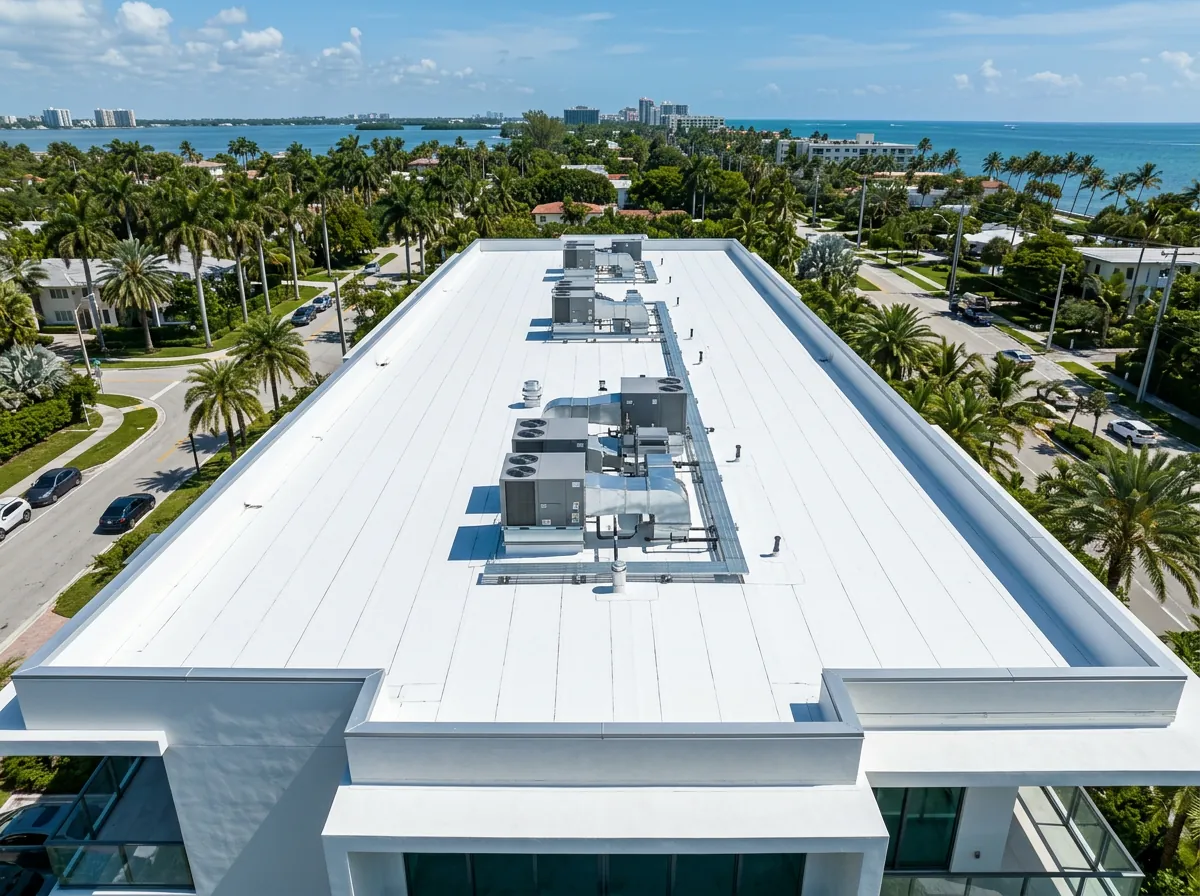
At a glance
TPO (thermoplastic polyolefin) is a single-ply roofing membrane whose seams are welded together with hot air, creating a continuous waterproof surface. Its bright white surface reflects sunlight, which is why it is popular on low-slope roofs in hot climates.
In South Florida
Whether the membrane is fully adhered or mechanically fastened, the method, fastener spacing and edge securement must follow the Miami-Dade NOA or Florida Product Approval for the roof.
Every welded seam should be probed and checked during installation. Ask how seams are inspected and documented.
Walk pads around A/C units and access points help prevent punctures during service visits.
Colors & finishes
TPO is most often white for reflectivity; light gray and tan are available from some manufacturers. Confirm color availability against the approved system.
Service life depends on the specific product, installation, ventilation and exposure. Ask for written manufacturer and workmanship warranty terms.
You do not need every answer to get started. A few photos and your priorities are a useful beginning.
Create your project brief ↗Metal Roofing · Tile Roofing · Shingle Roofing · Flat Roofing
Start with an assessment of the roof and any visible concerns. Ask for documented findings, a description of the proposed work and an explanation of what a repair would and would not address. The recommendation should reflect the condition of your roof rather than a diagnosis based on age alone.
Explore metal, tile, shingle, flat and TPO roofing on our roofing-systems pages. Roof shape, slope, structure, drainage, appearance and project requirements help determine which systems are suitable for your building.
Request the proposed roof assembly, removal and disposal scope, preparation and flashing details, permit coordination, cleanup, warranty terms and the process for concealed damage or other changes. Confirm which items are included before comparing totals.