Designed to your pattern
System size should reflect how your household uses electricity rather than an arbitrary maximum.
South Florida · Rooftop generation · Designed around your use
Put the strongest hours of Florida sun to work.
A roof-aware solar plan built from your electricity use, shade, available space and long-term priorities.
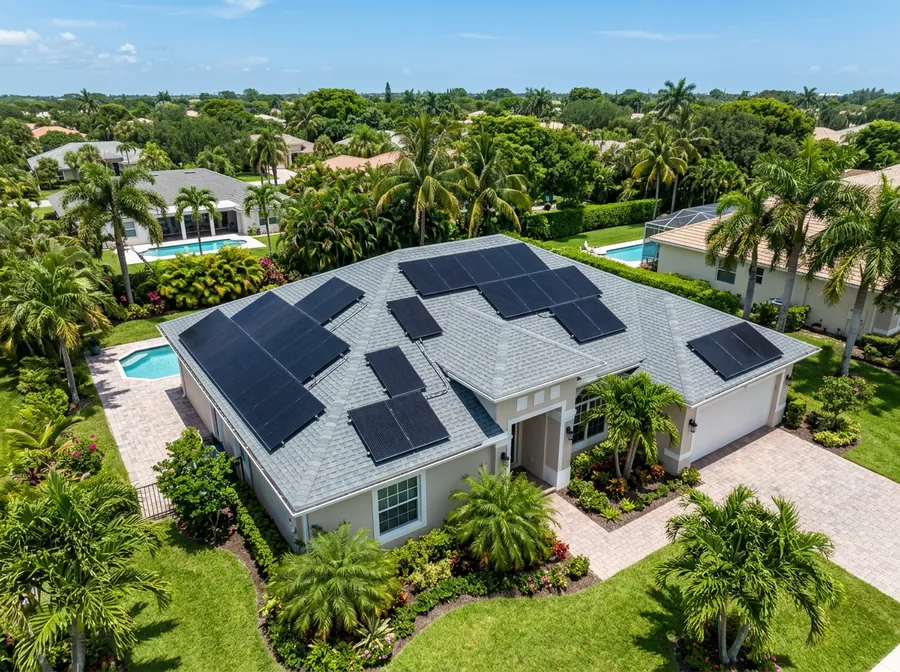
Start with the property
Solar design begins with evidence, not a panel count. Recent utility bills establish your use; roof geometry, shade and orientation establish the site; equipment and code requirements shape the layout. We bring those inputs together before discussing production assumptions, equipment and financing.
Why homeowners explore it
System size should reflect how your household uses electricity rather than an arbitrary maximum.
Roof condition, setbacks, access paths and drainage are considered before modules are placed.
Monitoring can show how the array is performing over time, subject to the selected equipment and connectivity.
A clear route forward
Review recent bills, major loads and planned changes such as an EV or pool equipment.
Model roof planes, shade, setbacks, equipment location and expected production assumptions.
Coordinate engineering, permits, installation, inspection and utility interconnection.
Details that shape the result
Good decisions live in the specifics. These are the conversations that turn a broad idea into a useful scope.
Age, remaining life, material and condition should be understood before placing a long-lived array.
Compare module dimensions, output, inverter architecture, monitoring and written warranties.
Orientation, trees, vents and required access paths affect where panels fit and how they perform.
Review the model inputs and expected annual range; weather and household use will vary.
Straight answers
That depends on your annual use, roof space, shade, module selection and goals. A useful proposal shows the assumptions behind the recommended size.
If the roof is near the end of its service life, coordinating roof work before solar can avoid removing and reinstalling the array later.
Grid-tied panels normally shut down during an outage unless the system includes compatible equipment designed to create a safe backup power source.
Make the first conversation useful
Keep exploring