An integrated appearance
Energy-producing and non-producing sections are composed as part of the roof rather than laid over it.
South Florida · Roof surface · Energy system
One exterior, designed as one system.
Explore an integrated solar roof when both the roof and the way it produces energy are part of the project.
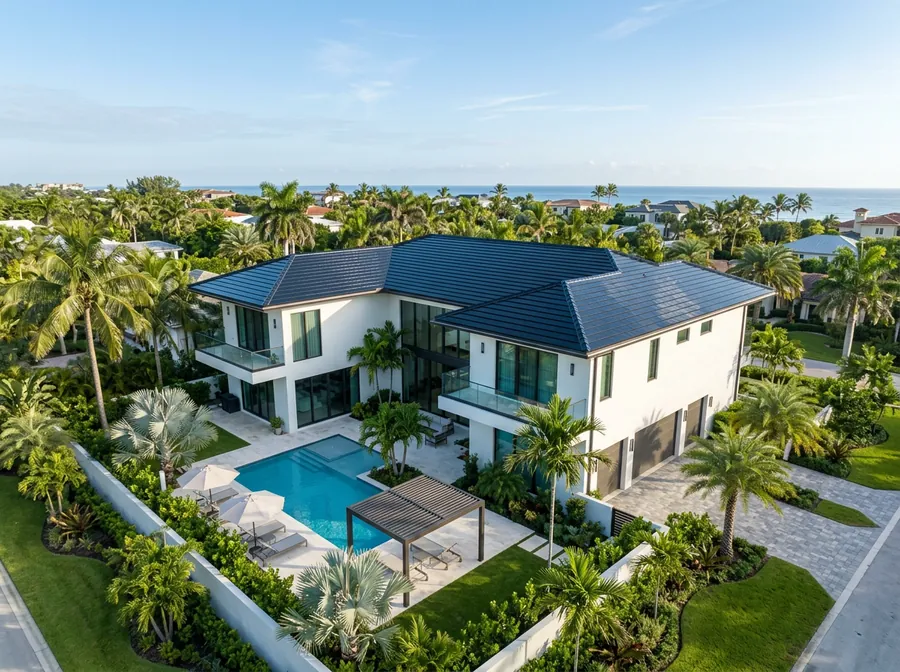
Start with the property
Solar roofing is considered differently from panels added above an existing roof. It combines active energy-producing sections with compatible non-producing roof sections, flashings and drainage details. That makes roof geometry, structural conditions and electrical design part of the same early conversation.
Why homeowners explore it
Energy-producing and non-producing sections are composed as part of the roof rather than laid over it.
Roofing, electrical and energy design decisions are reviewed together from the beginning.
It can make sense when the existing roof already needs replacement and solar is a priority.
A clear route forward
Review roof age, shape, structure, shade, energy use and product availability.
Develop the roof layout, active areas, electrical equipment, flashings and drainage as one package.
Align engineering, approvals, roof work, electrical work, inspection and activation.
Details that shape the result
Good decisions live in the specifics. These are the conversations that turn a broad idea into a useful scope.
Simple, sun-exposed planes generally provide more useful active area than heavily shaded or fragmented roofs.
Not every roof section needs to produce energy; the composition balances performance and appearance.
Integrated roof products, approved assemblies and installer eligibility must be confirmed for the address.
Future access to wiring, roof details and equipment should be considered in the design.
Straight answers
No. Traditional modules mount above a finished roof. Solar roofing incorporates energy-producing components into the roof surface itself.
Integrated solar roofing is generally part of a full roof scope. The existing roof and deck must be evaluated before a system can be proposed.
Usually not. The design combines active sections where production is useful with compatible roofing elsewhere.
Make the first conversation useful
Keep exploring
Yes. Roof condition, available space and planned roof work should be discussed before panel layout. If roofing and solar are part of the same project, clarify the installation sequence and responsibility for attachments, access and warranty questions.
Do not assume so. Outage backup requires an appropriately designed system. Discuss battery storage, backup equipment and the circuits you want to support; operating time depends on the design, available charge and connected loads.
Bring recent electricity bills, roof information and a list of the circuits or appliances you want to support during an outage. Ask for production and backup assumptions specific to your property, plus equipment compatibility and written warranty terms.